Milestones
Muller Martini – a history, which has now lasted for over 70 years
A system that started with cardboard and wooden boxes developed sixty years later into a unique total system for digital book production systems allowing beautiful books to be produced from a PDF file in a matter of minutes. Muller Martini recognizes market trends early, and is a convincing, innovative global player in the graphic design industry due to its high level of technical competence.
Muller Martini ignites the next stage of MMServices with Smart Services and uses digital tools that allow customers to monitor the condition of the machine, for example. The MPOWER customer portal with integrated eShop is providing simple and secure access to selected services.
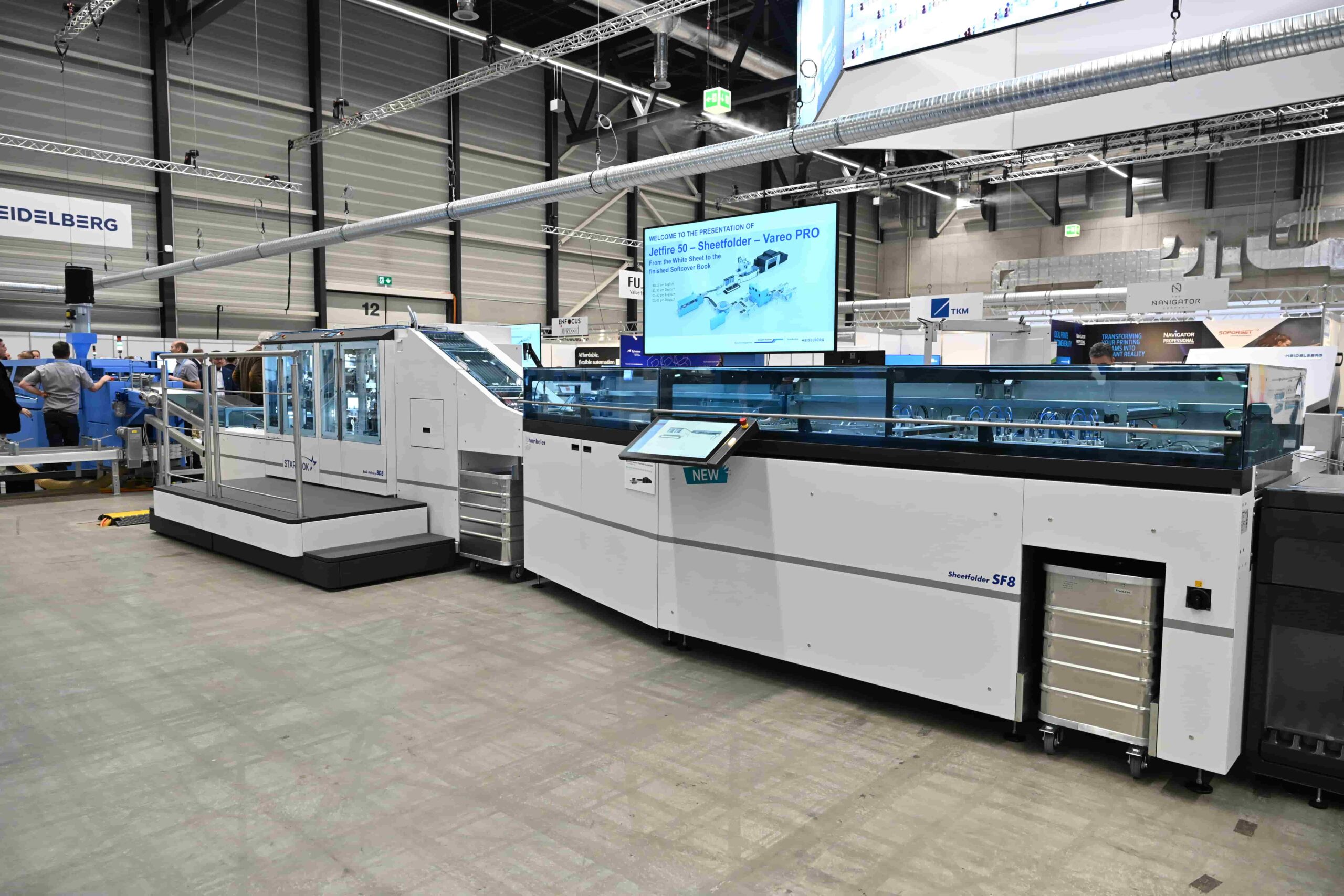
The Muller Martini Group acquire Hunkeler AG in Wikon, Switzerland, in 2023. This not only strengthens its position as a leading provider of solutions for digital print finishing, but also expands its offering for additional print applications. The combination of expertise and innovative strength creates a unique technology portfolio for industrial print production.
In May 2022, company owner Rudolf Müller handed over the leadership of the Board of Directors of Muller Martini Holding AG to long-time Board member Martin Wipfli, but remains a member of the Board.

The digital transformation is also advancing in the graphic arts industry. Muller Martini is establishing itself as a specialist for smart factories that produce successfully for customers worldwide. We find the perfect workflow for every operation and make it fit for the digital world.

In order to strengthen its market position and serve customers even better in the long term with innovative solutions, Muller Martini is taking over Kolbus’ bookbinding business in 2018 and expanding its product portfolio to include Kolbus brand machines.
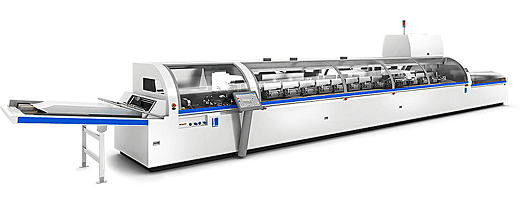
Hans Müller, a pioneer of the graphic arts industry who remains closely linked with the company even into his advanced years, dies at the age of 96. The company founder is remembered not only as a brilliant engineer, but also as a kind and generous leader. At the same time the company restructures to adapt to major market changes in the graphic arts industry. The sales and service companies are merged globally into regions. The company now focuses on its main competences PostPress and Services. In 2014 it takes over service responsibility for Heidelberg saddle stitcher and perfect binder.

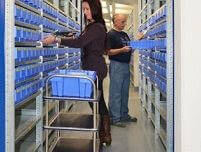
In Zofingen a new, central Spare Parts Center is set up to supply the European markets. The new logistic center with more than 110,000 parts guarantees an availability of more than 90 percent.
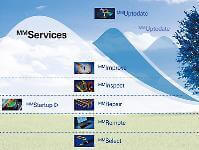
Ipex 2010 sees the unveiling of Muller Martini’s global service offering, MMServices. The globally standardized and recently expanded life cycle management program provides customers an increased investment security.
In May 2009 former CEO Rudolf Müller assumes the position of president of the board of directors, which he had been a member of for 18 years. The new CEO, Bruno Müller, has worked at various companies within the Muller Martini Group for some 20 years, including in the US.

The new generation of Muller Martini machines, presented at drupa 2008 for the first time, encompasses numerous technical innovations and a completely reworked, modern design.
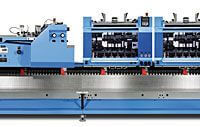
The ProLiner inserting system, first introduced in 2007, is designed to meet the individual requirements of newspaper operations of all sizes. The system caters to complex mailroom requirements such as zoning and regionalization, as well as the growing number of preprinted sections and inserts.
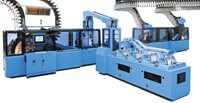
The trend towards digital networking of individual production steps continues to be unstoppable and CIP4 is established as a standard. The Connex data and process management system allows all Muller Martini systems from individual machines to complex production lines to be networked with a customer’s Management Information System (MIS).
The standards for print products rise: there is the call for shorter runs, customization and topicality going with lower costs. Muller Martini meets this challenge in 2004 by introducing the SigmaLine – a unique total solution for industrial digital book production. The SigmaLine links all processes from pre-press through digital printing to print finishing, enabling fully automated production in a single pass.
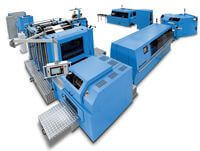
The acquisition of VBF Buchtechnologie GmbH in 1998 further extends Muller Martini’s claim to a comprehensive print finishing portfolio. Muller Martini Book Technology GmbH in Bad Mergentheim, Germany, today serves as a training center for complete systems for hardcover production.
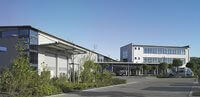
The machine portfolio is topped off by the acquisition of Graphic Management Association Inc. (GMA) in Allentown, USA, the market leader at the time for inserting machines and mailroom equipment (later Muller Martini Mailroom Systems, Inc.).
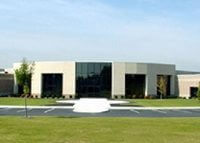
On April 1, 1991 Hans Müller hands over the reins to his two sons Rudolf Müller and Hans Müller-Meier.
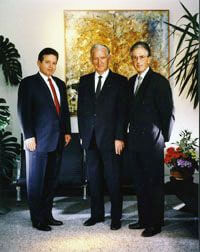
In the mailroom segment, the automatic mailroom system (AVS) unites a whole range of machines and systems that control the entire mailing process, from printing press to truck. The heart of the system is an electronic guide and control system.
The Normbinder SF introduced in 1976 with a performance of 18,000 cycles/h is the fastest perfect binder in the world at the time.
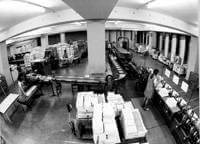
Increasingly powerful printing presses also mean an increase in the demands on paper handling. Launching the first bundle Stacker Feeder in 1975 marks the beginning of the press delivery systems business segment.
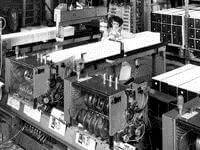
With the new 221/235 saddle stitcher generation that boasts a performance of 12,000 cycles/h once again Muller Martini surpasses its competitors. It goes into serieal production in 1970/71. For the first time ever, it was possible for a card gluer to glue cards in a precise location to appeal to consumers and to apply merchandise samples.
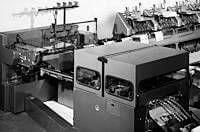
In 1970 Maschinenfabrik Hasle AG is founded in the Entlebuch municipality in the canton of Lucerne. Now known as Muller Martini Machines & Systems AG, it is the training center for sheet manufacturing for all Muller Martini systems, and one of the most modern sheet processing operations in Switzerland.
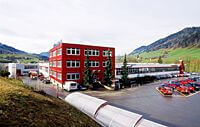
Grapha purchases the majority shareholding in Martini Buchbindereimaschinenfabrik AG, Felben in 1969.
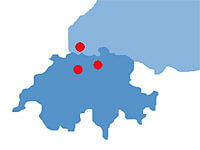
In 1964 Grapha AG Maschinen (today Muller Martini Electronic AG) is established in Zofingen, Switzerland, and plays an anticipatory role in the electronification of systems. 1966 sees the establishment of the first manufacturing company abroad, Maschinenfabrik Grapha GmbH (today Muller Martini Printing Presses GmbH), in Maulburg, Germany.
On June 19, 1956 the organization is converted into a stock company called Grapha Maschinenfabrik Hans Müller AG.
In 1955, Hans Müller and Alfons Futterer founded the first in-house sales company, Grapha GmbH, in Stuttgart (Germany). In England and the USA, distribution was handled by partners.
The first perfect binding system for emulsion glue, the RB-2 rotary binder (3,000 cycles/h) also comes on the market in 1954. Its successor, the RB-5 rotary binder, is introduced in 1962. It boasts a performance of 5,000 cycles/h and a hotmelt processing option. By 1986 around 1,000 rotary binder units have been produced.
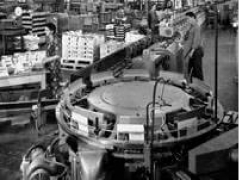
Four years later the world’s first fully automatic brochure saddle stitcher, the BSV (4,000 cycles/h) follows, For the first time, it combines feeder, stitching machine and three-knife trimmer. Hans Müller’s groundbreaking “flying stitching heads” patent for synchronized stitching heads enables stitching without “stop and go” – technology which is first used in 1956.
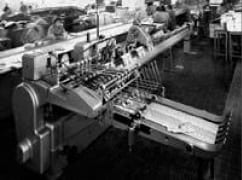
1950 Hans Müller designs the first saddle stitcher with automatic signature feeders.
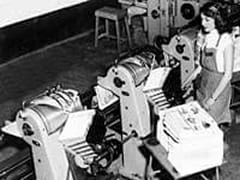
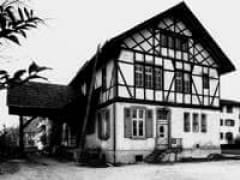
The Müller and Ruf general partnership is founded on April 1, 1946.Its subsequent breakup results in the formation of the private company Hans Müller Maschinenfabrik in 1947. The original factory today contains the company’s Sunflower children’s’ day-care facility.