Artificial Intelligence – Key to Securing a Competitive Edge
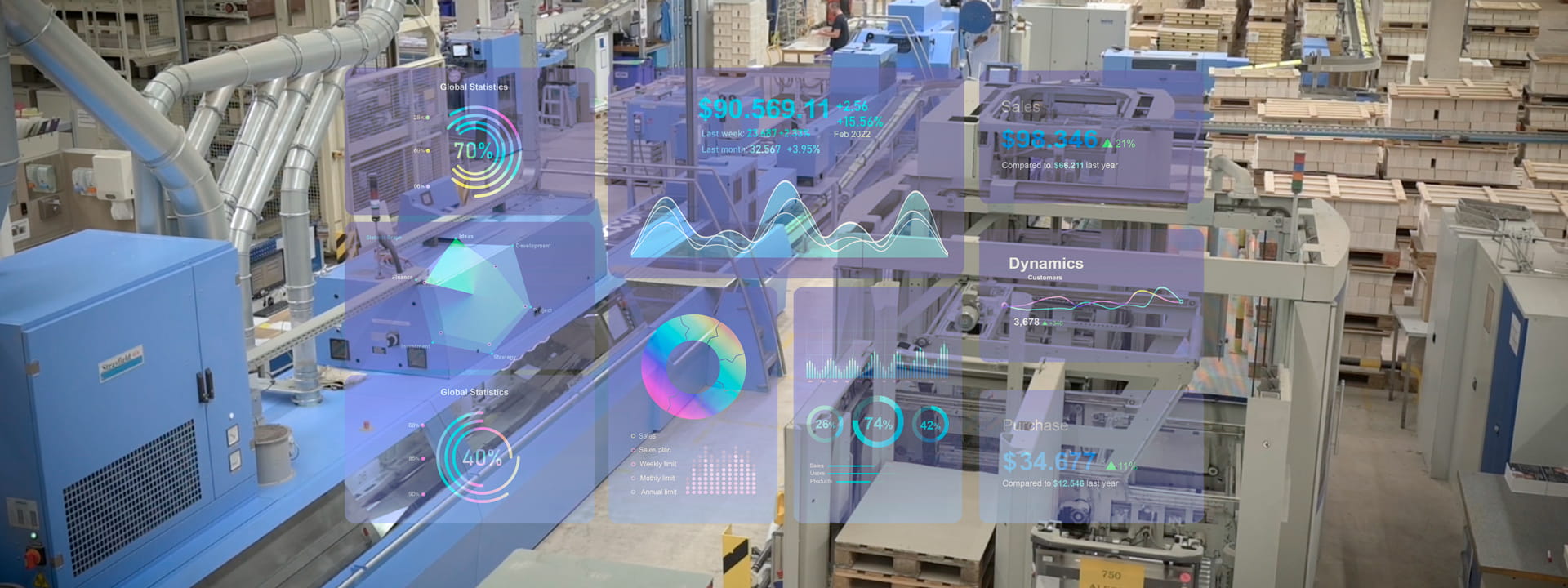
The future of the printing industry lies in seamless networking of customers all the way to the warehouse and back, and in intelligent data analysis and the implementation of AI-powered applications. AI can be harnessed to optimize the quality and efficiency of individual process steps and automate them. At the same time, it can help save on resources and capture new business segments.
The economic situation in the graphic design industry has been strained for many years. Digitalization in the media landscape in particular is increasing the pressure on the printing industry. Advertising budgets have been reallocated to digital channels on a large scale. Meta, Google, and the like are the big winners, raking in about 80 percent of advertising expenditures online. This has resulted in a drastic decline in commercial and newspaper printing. One clear indicator is falling paper sales. Since 2019, sales of coated and uncoated paper have declined by nearly half in Western Europe alone – with the trend continuing downward. The volume to be printed has gotten smaller, competition fiercer. In addition, energy prices have shot up drastically, which has a direct impact on the costs for paper and consumables, plus there is a growing shortage of skilled workers. But the current geopolitical situation, too, is contributing to general uncertainty.
Production designed for efficiency
Despite these challenges, there are still businesses able to hold their ground in this demanding environment. What these companies have in common is a clear positioning, a targeted marketing and sales strategy, and networked production designed for efficiency. They have also expanded their range of products and services. Because there are new possibilities along the entire value chain, through digital enhancements. And this is where artificial intelligence (AI) comes into play.
AI can be harnessed to optimize the quality and efficiency of individual process steps and automate them. At the same time, it can help save resources and capture new business segments – such as graphic design or the creation of digital media. The potential associated with AI is huge and ranges from targeted marketing and sales activities to the design and production of print products all the way to proactive service concepts. All of this is based on algorithms that, thanks to machine learning, recognize patterns and derive actions from them – with a wide range of possible applications.
For example, it makes sense to search the data stored in the ERP system using an AI tool to find out what the customer actually needs, what is important for individual customers when it comes to pricing, and how likely the sale is. What factors play a role – price, delivery date, range of products, customer relationship? AI can also bolster customer support with chatbots. Within less than three months, this kind of AI model can be optimized and tailored to the situation of the respective print shop and ready for use according to different AI consultants.
AI creates new visual worlds
The potential of AI shines in content creation and image processing. These days, AI is already used by many editors as standard for research and editing texts. And AI has long been established in graphic design. Image databases are filled with AI-generated images and design platforms like Canva, Visacreate, or Figma support AI users in designing logos, banners, business cards, or signs. Today, free-form select is possible or a background can be extended with a click of the mouse using generative AI. And if you formulate the right prompts, you can create new worlds of imagery in no time at all. The Adobe Cloud has a lineup of AI tools designed for content generation and creative composing. Other interesting tools for image generation include DALL-E, Midjourney, or Stable Diffusion – here, the images have even found their feet, filling the Internet with AI-generated videos.
Alarms sounding
AI has also now spread in the prepress workflow. It can provide suggestions for enhancing the CMYK color space with one or more additional colors to get a handle on special colors. Another starting point is optimizing the signature waste – after all, different formats and paper types especially increase complexity. Based on the existing order pool, AI identifies the right waste arrangement to optimize use of the signature format. Online printers have shown how it’s done – and built their business model on gang-run printing. In the future, AI-supported workflow software will also decide which printing process is most efficient and cost-effective and initiate all the required steps all the way to printing.
Autonomous printing requires AI
No matter whether analog or digital printing, AI is a must to optimize processes. By integrating the machines into a cloud-based workflow solution, printers get an optimal job sequence for their shift based on the paper, signature format, colors, etc. right at the central console. This reduces setup times and waste rates significantly. Extensive networking, preferably throughout production, is essential. At the heart of it all is the ERP system. Evaluation of machine data generated enables internal and external benchmarking, delivering valuable insight into potential optimizations.
Preventive service
By continuously analyzing the machine data found in a print shop from the CTP system to the saddle stitcher, preventive maintenance concepts can be put into practice. This requires big data applications constantly supplied with new data via the cloud, enabling machine learning (ML). De facto, AI learns from every fault and troubleshooting to keep technology available and schedule service – a win for both sides. At Müller Martini, AI is also being used more frequently in service. With a know-how database of historical service data and specific customer requests, AI supports service technicians in resolving customer matters faster.
Müller Martini also thinks beyond the machine – towards workflow management and warehousing concepts. With its Connex, Müller Martini is ideally equipped to harness the potential of AI along the entire value chain.
The printing industry is under pressure. But businesses that recognize and take advantage of the opportunities presented by artificial intelligence can not only optimize processes but also set a new course. AI isn’t a thing of the future anymore – it’s happening now, and it’s a crucial factor to remain competitive tomorrow.
Knud Wassermann